











logo
ink-splash

SHA

LE

TTERED

EGAC

CY

shard shard shard shard shard shard shard shard shard shard shard shard shard shard

THE RISE AND FALL OF THE MORETUS DYNASTY

ink-splash

SHATTERED
LEGACY

shard shard shard shard shard shard shard

THE RISE AND FALL OF THE
MORETUS DYNASTY

rose

jan-moretus

From greatness to obsoletion,
the Moretus family

rose

jan-moretus

...and fell with

albert-moretus

the press.

In the 19th century, they faded into obscurity just as they had achieved international fame, wealth and prestige hundreds of years prior.

In this story, we will explore some important members of the Moretus dynasty, and how the business changed, for the better or worse, under their rule.

Jan Moretus

I. JAN

MORETUS

THE MIND BEHIND STABILITY

I

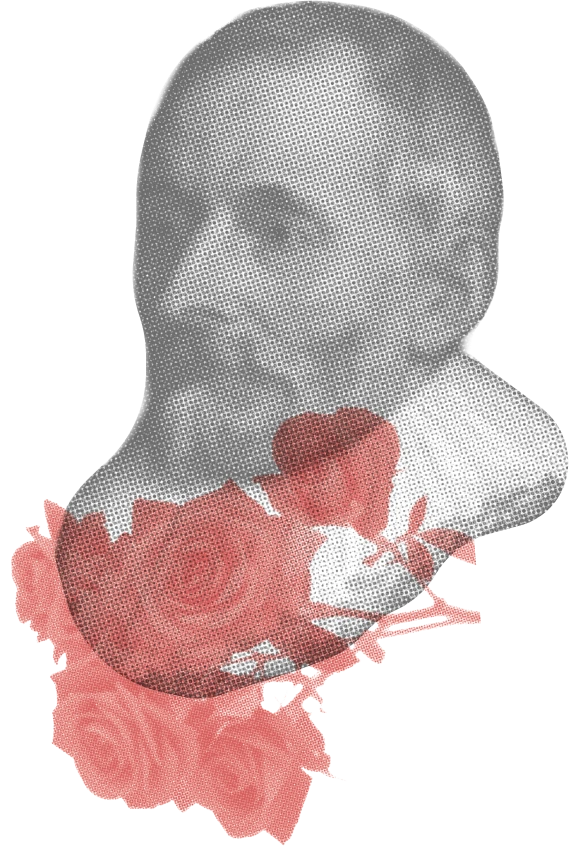
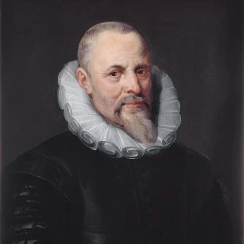
Born in 1543, Jan Moretus (né Moerentorf) would apprentice under Christophe Plantin from the age of 14. He married the latter daughter, Martine, years before inheriting his then father-in-law’s printshop.

Plantin trusted Moretus so much that he left him as the sole heir to his business - even despite his own blood relatives’ claim. His own words, in a letter written to Gabriel de Çayas, the secretary of the Spanish King:


quotes

....[Moretus] has always served me in both good and bad times, without abandoning me because of any ill-fortune which overtook me or because of the promises or inducements that others were able to make him. [...]

Christophe Plantin

CHRISTOPHE PLANTIN,
1570

As head of the Officina Plantiniana, Jan Moretus’ policy and attiutude can be summarised through his motto.

Plantin’s words were ‘Labore et constantia’ - labour and perseverence, both paramount to a newly founded business.

Taking over a flourishing press required something else: careful action to strengthen the foundations laid by his predecessor. Thus, a new motto was born to symbolise the precision required for the task.

RATIONE

R

E

C

T

A

["BY RIGHT
OF REASON"]

The press ex

panded

its international fame through
quality and accuracy.

[CLICK ON COUNTRY
FOR MORE INFO]

brick brick brick brick brick

Moretus’ work strengthened the foundations for centuries of successful business.

However, the seeds for Officina Plantiniana’s eventual downfall had also been planted. Moretus’ attitude, despite his prosperous tenure, remained one of conservatism.

He built on existing foundations and relationships, took the route of safety, yet... he failed to truly innovate.

II.
BALTHASAR

MORETUS

THE CREATOR

Balthasar I Moretus
2

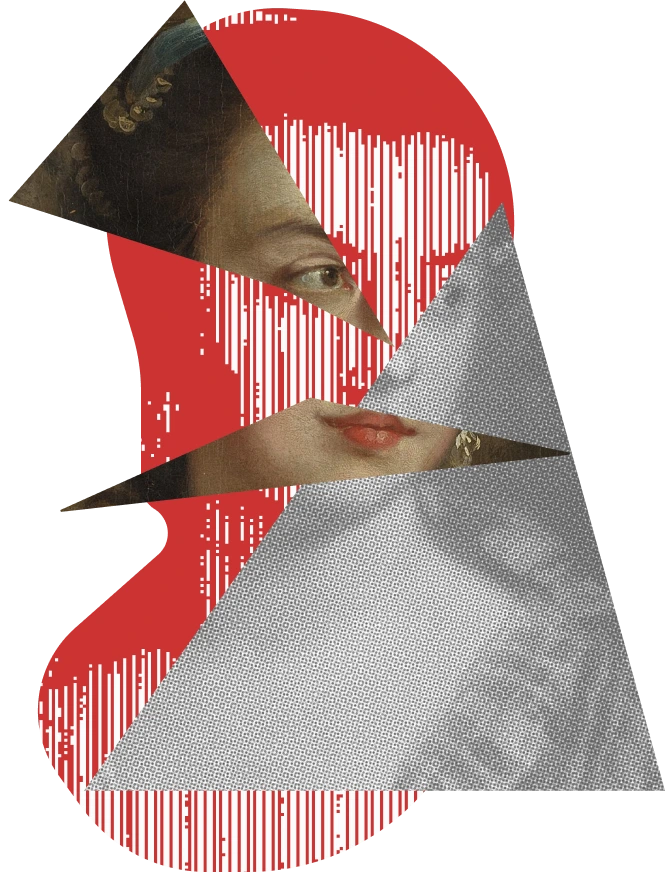
Jan Moretus’ son, Balthasar I, initially ruled the Officina with his brother from 1614 to 1618. After the latter’s early death, he continued on his own - aided by his nephew Balthasar II - until 1641.

His policy was somewhat different from his father’s: instead of just focusing on preservation and consolidation, he also opted to build and innovate, to expand the business across multiple dimensions.

[ CLICK ON THE PLUS SIGN
 TO BUILD ]

Between 1620 and 1640, Balthasar I commisioned the construction of an additional wing. Including, yet not limited to the proofreader’s room, the upgrades gave the building most of its modern appearance.

Officina Plantiniana Balthasar's expansion
Fancy border

Balthasar built more than just walls.

He was friends with the painter
Peter Paul RubensRubens since childhood.

Printing ball Paintbrush

Their relationship spelled years of collaboration. Custom book covers and illustrations drove growth among historical and neo-Latin publications, while portraits of the Moretus family and their close friends adorn the walls of the Officina to this day.

With Balthasar I’s death, this age of innovation also petered out. Soon after, the business’s sales would revolve entirely around religious works for the Spanish crown, which, along with excessive anchoring in traditions, would spell misfortune for the later Moretuses.

Fancy border

III.
JOANNES

JACOBUS

MORETUS

THE WEALTHY BUSINESSMAN

Coin Coin Coin Coin Coin Coin Joannes Jacobus Moretus

By the 18th century, the Officina's focus had narrowed almost entirely to religious printing, bound by contracts with the Spanish crown. Although profitable, this shift marked a departure from its earlier intellectual ambitions.

Under Joannes Jacobus Moretus (1690 - 1757), the press lost its spark — yet the family’s fortunes soared. Would  THAT be enough to sustain the family’s status as top printers? First, let's look at how that wealth came to be in the first place.

2
Theresia Mechtildis Schilders

1714

Joannes had already inherited a sizeable amount of wealth - around 180 thousand Dutch guilders from his marriage to the noble Theresia Mechtildis Schilders.

He managed to
more than

180k * 3.38(3) = 609k

Pile of coins Pile of coins

3x

it by 1739

1720 -1755

His business interests extended beyond the ancestral printing press and into colonial ventures, such as the Ostend Company and the Trieste and Fiume Company.

Gold Coin Gold Coin Gold Coin
Gold Coin

1757

Coffin

At the time of his death, his estate was worth around

2 000 000 000 guilders

~ 45 million euros in today’s purchasing power.

Coins
Coins

Despite Joannes’ massive wealth, the press’s output was hardly reinvigorated. The Officina usually employed no more than 11 presses, all used for religious works. The number fell to as low as 2, during the Austrian War for Succesion.

The over-reliance on the Spanish contracts, as well as the relative austerity the printing business had to face were close to proving fatal for the Moretus legacy. And yet, it endured...

Books Books

Until the

SHADOWS

SHADOWS

fell.

Ink

IV. MARIA

THERESIA

Four

BORREKENS

THE BEGINNING OF THE END

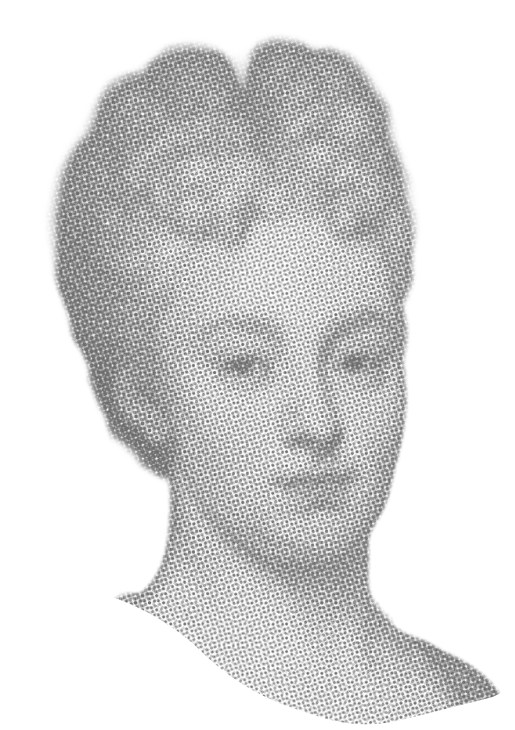
Maria Theresia Borrekens (1728-1797) was the wife of Franciscus Moretus, Joannes’ son. One of the four women to assume control of the Officina, she ruled the press for nearly 30 years, from 1768 to 1797.

Maria Theresia Borrekens

Her lasting tenure as director of the Officina more than earned her a place among the Moretus family. Despite her best efforts, darkness had started to consume the press, through a series of catastrophic losses.

Losses-image

It was Maria’s determination that kept everything together.

Press Press Press Press

After she passed away in 1797, the business was inherited by her 3 remaining sons, Jacobus Paulus, Ludovicus Franciscus and Josephus Hyacinthus.

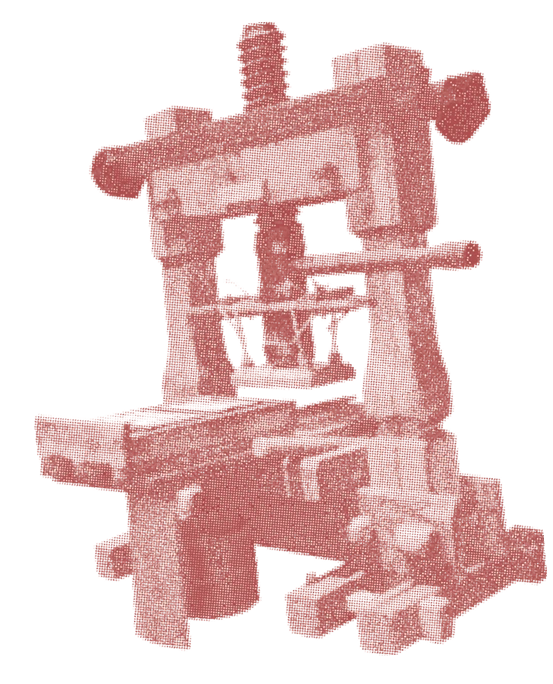
Neither ruled as long, or as steadily as their mother. They failed to upgrade the wooden presses to modern, metal ones, and by 1820 the business had become outdated, clinging for survival.

V.ALB

ERT

Albert Moretus

MOR

ETUS

THE FINAL STRUGGLE

When the last of Maria’s sons relinquished his position as head of the Officina to his nephew, Albert (1795 - 1865), the press’s over-reliance on tradition

had all but buried its legacy.

Metal presses were already emerging at the end of the 18th century - when Albert took control, they were already

the industry norm.

[CLICK AND HOLD
ANYWHERE

TO TEST THE EFFORT]

The newer presses used additional levers, hand-wheels, gears, and even steam-powered engines.

The large force needed to leave an impression on paper was handled by these advanced mechanisms, instead of the printer’s own physical strength.

Wooden Press Handle Wooden Press Screw
Metal Press Gear Metal Press Gear
Metal Press Wheel Metal Press Gear

In 1828, Albert attempted to modernise.

...but the new presses would never be seen inside the Officina Plantiniana.

... and neither would be any more successful business. The press had finally been pushed to its point of no return.

All efforts to for the Officina’s revival were stopped soon after. The decades that followed meant nothing but hasty decline.

In 1865, Albert Moretus dies.

In 1866, the last book is issued.

In 1876, Edward Moretus sells the press to the city of Antwerp.

Book Shard Book Shard Book Shard Book Shard Book Shard Book Shard Book Shard Book Shard

By the time Edward, the last Moretus, died in 1880, only echoes remained of the press's legacy. The business and family were no more. Their legacy, shattered.

Tradition cannot survive through preservation alone. Innovation is needed to ensure survival across changing times - which the Officina Plantiniana, unfortunately, failed to achieve.

By focusing exclusively on religious printing in an increasingly laic world, by mistaking heritage for timelessness and wealth for success, they laid cracks into their business’ very foundation - which in time, became gaping holes. And yet...

...failure doesn’t mean destruction.

The press stopped its function - but it didn’t cease to exist. It transformed into the very museum we’re proud to welcome you in.

The Moretus bloodline may have died out - that doesn’t mean it never existed.

Their work still fills the halls of the Plantin-Moretus museum, and their reputation as top printers remains almost intact despite their late blunders. Time never erased their merit. And merit, they had.